Study on Real Estate Search Model using RAG Applied Property Graph Index
DOI:
https://doi.org/10.64142/jeai.2.1.41Keywords:
Generative AI, Property Graph Index, Real Estate Search, Retrieval-Augmented Generation (RAG), Property graph indexingAbstract
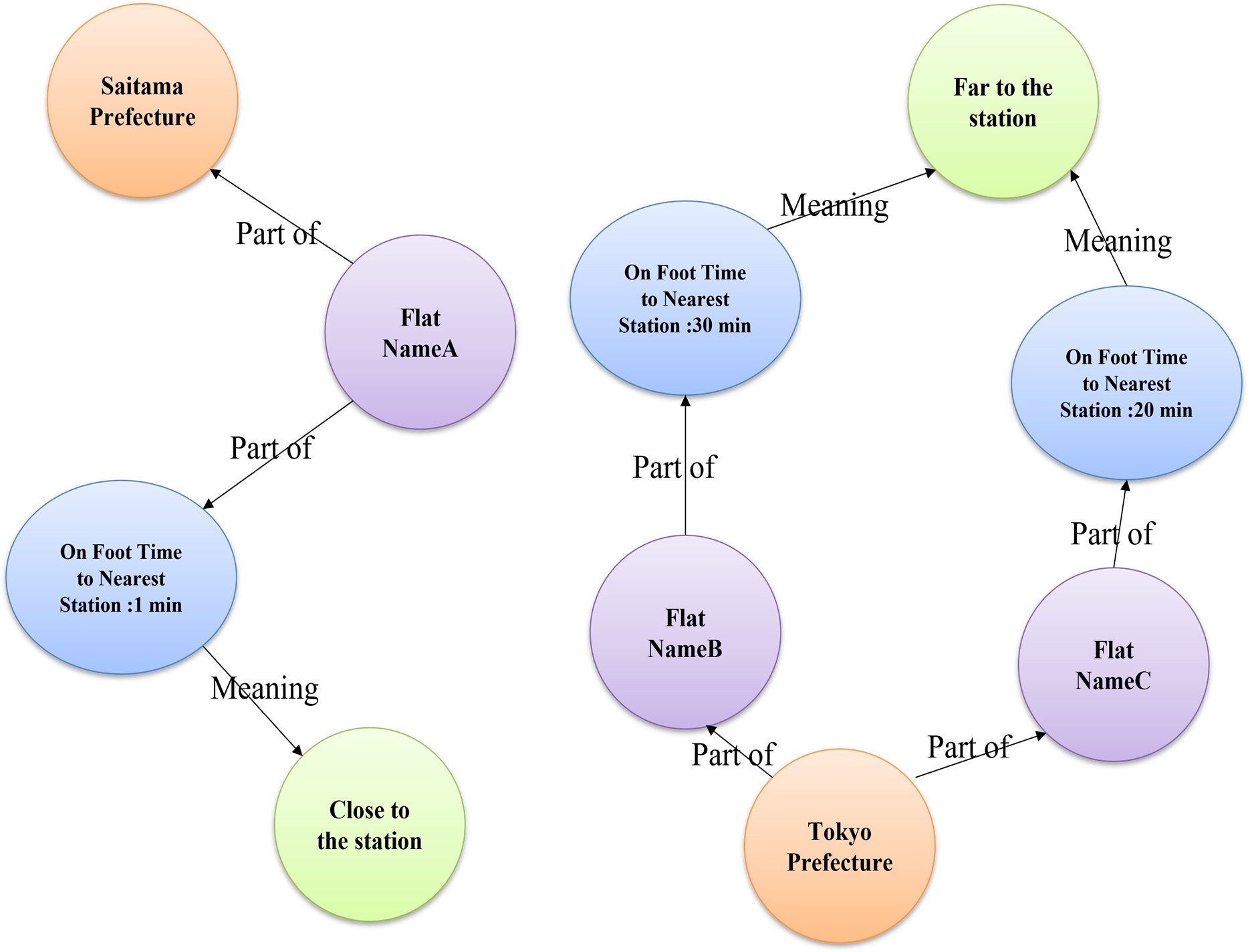
Retrieval Augmented Generation (RAG) is a text-generative AI model that combines search-based and text-generative-based AI models. Because original data can be used as external search data for RAG, it is not affected by incorrect data from the internet introduced by fine-tuning. Furthermore, it is possible to construct an original generative AI model that has expert knowledge. Although the LlamaIndex library currently exists for implementing RAG, text vectorization is performed using an approach similar to doc2Vec, creating issues that affect the accuracy of the generative AI’s answers. Therefore, in this study, we proposed a property graph RAG that can define meaning when indexing text by applying the property graph index to LlamaIndex. For example, if a property was 10 years old, traditional RAG could not determine whether it was relatively new or old. However, by applying the property graph index, it becomes possible to meaning-making “relatively new” and “relatively old,” this enables responses that better align with the user's question intent. Evaluation experiments were conducted using 10 real estate datasets and various cases including sales prices, on foot time to nearest station (min), and exclusive floor area (m²), and the results confirmed that the proposed generative AI model offers more accurate answers than Prompt Refinement and Text-to-SQL for property search indexing.
Downloads
References
Gao Y, Xiong Y, Gao X, Jia K, Pan J, et al. (2023) Retrieval-augmented generation for large language models: A survey. arXiv. https://arxiv.org/abs/2312.10997
Kumar V (2024) Chunking strategies for rag in generative AI. ADaSci. https://bootcamp.adasci.org/chunking-strategies-for-rag-in-generative-ai/
Kaur I (2024) AI metadata extraction and filtering from scientific research articles. https://www.crossml.com/ai-metadata-extraction/
Saad-Falcon J, Barrow J, Siu A, Nenkova A, Yoon S, et al. (2023) Pdftriage: Question answering over long, structured documents. arXiv. https://arxiv.org/abs/2309.08872
Møller AG, Aiello LM (2025) Prompt refinement or fine-tuning? best practices for using llms in computational social science tasks. arXiv. https://arxiv.org/abs/2408.01346
(2025) Knowledge Graph Index. LlamaIndex. https://developers.llamaindex.ai/python/examples/index_structs/knowledge_graph/knowledgegraphdemo/
(2025) Using a property graph index. LlamaIndex. https://developers.llamaindex.ai/python/framework/module_guides/indexing/lpg_index_guide/
(2025) Text_to_sql. LlamaIndex. https://developers.llamaindex.ai/python/framework/use_cases/text_to_sql/
llamaindex Docment.
(2024) Introducing the property graph index: A powerful new way to build knowledge graphs with llms. LlamaIndex. https://www.llamaindex.ai/blog/introducing-the-property-graph-index-a-powerful-new-way-to-build-knowledge-graphs-with-llms
Ouyang L, Wu J, Jiang X, Almeida D, L Carroll, et al. (2022) Training language models to follow instructions with human feedback. arXiv. https://arxiv.org/abs/2203.02155